
Kalawao County Arrest News
No verified county booking feed exists for Kalawao. There is no city blotter either. No public mugshot roster. News fills the discovery gap, not the custody gap. Enforcement here spans DOH and Kalawao officers, NPS park personnel, and Maui Police mutual aid, so knowing which agency sits behind a story matters.
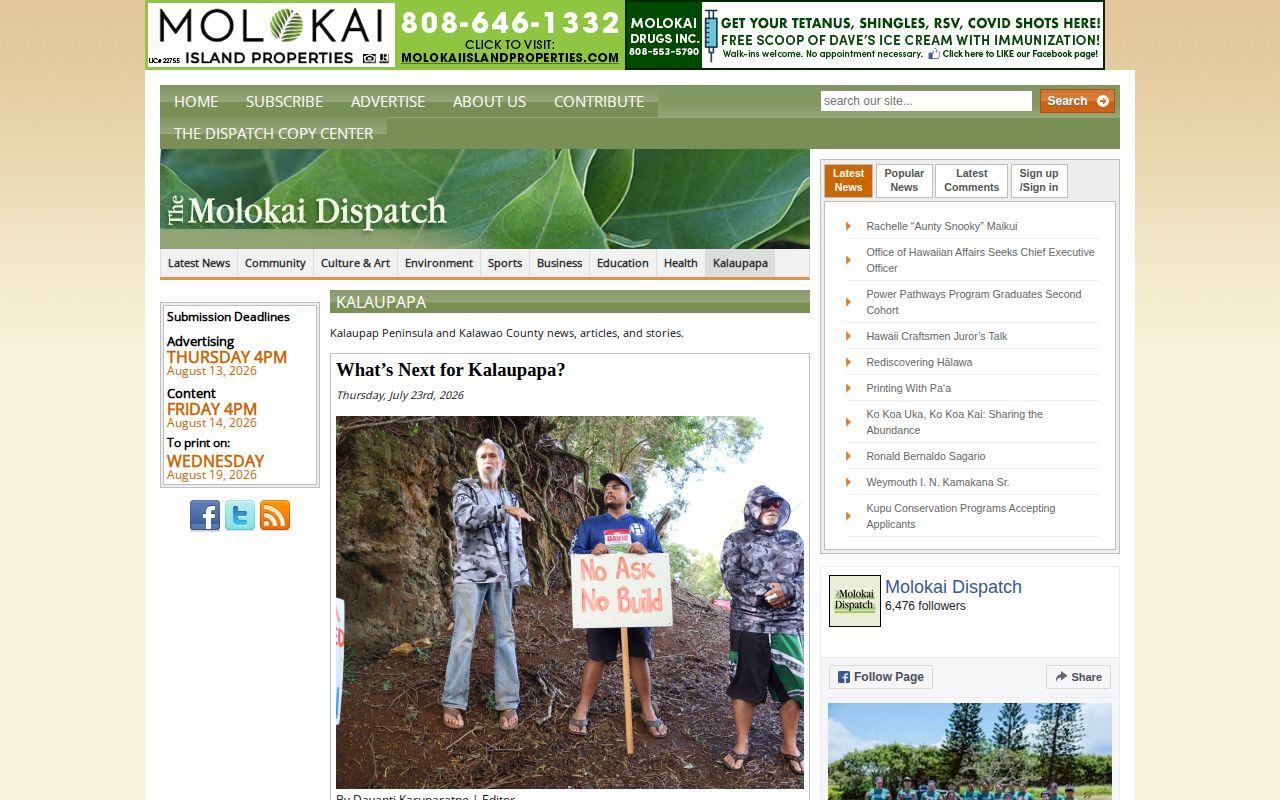
The Molokai Dispatch news section is the strongest local lead. It even has a dedicated Kalaupapa category. Maui News and Maui Now cover wider Molokai topics and pick up Kalawao events when they warrant it. Hawaiʻi Public Radio adds statewide public-affairs context. None claims a complete booking or photo archive. The state Department of Corrections and Rehabilitation remains a separate custody source.
Official channels come next. Maui Police News & Events sometimes carries public-assistance and safety notices. ECourt can surface a case once it is filed. For a booking photo or custody status, go to the creating agency or the state system. The screenshot below documents the community outlet, not a list of people. The Molokai Dispatch Kalaupapa category is the closest route to settlement-specific reporting.
That reporting can flag a public event. It cannot stand in for a booking record or a court outcome.
Local Arrest-News Outlets Cover Kalawao
The table below keeps editorial reporting apart from official custody data. A checkmark for "Photo" only means an image may appear in an article or post. That says nothing about whether the image is a booking photo. It promises no complete archive of Kalawao arrests.
| Outlet or channel | Coverage | Photos? | Record status |
|---|---|---|---|
| The Molokai Dispatch | Molokai and Kalaupapa community news, including public-safety reporting. | Article-specific images may appear. | Editorial selection; verify with the named agency. |
| The Maui News | Regional Maui County local news that can include Molokai. | Editorial or supplied images may appear. | Not a Kalawao booking log. |
| Maui Now | Molokai arrest tag and regional stories. | Story-specific images may appear. | Irregular editorial archive. |
| Hawaiʻi Public Radio | Statewide and local policy reporting, including Kalaupapa context. | Story imagery, not roster photos. | Background and public-affairs source. |
| Maui Police News & Events | Official public-assistance, safety, and department updates. | Some individual posts may carry images. | Official selected posts, not a complete feed. |
| Hawaii News Now | Occasional statewide coverage of Molokai or Kalaupapa incidents. | Article-specific imagery. | Broader reporting; no dedicated Kalawao roster found. |
Local outlets shine when an agency name, a person's name, or a date is hard to pin down. What they cannot do is tell you who is in custody right now. A story stays online long after release, a correction, a dismissal, or a changed charge. Age is the trap here.
Kalawao News Photos: Where They Come From
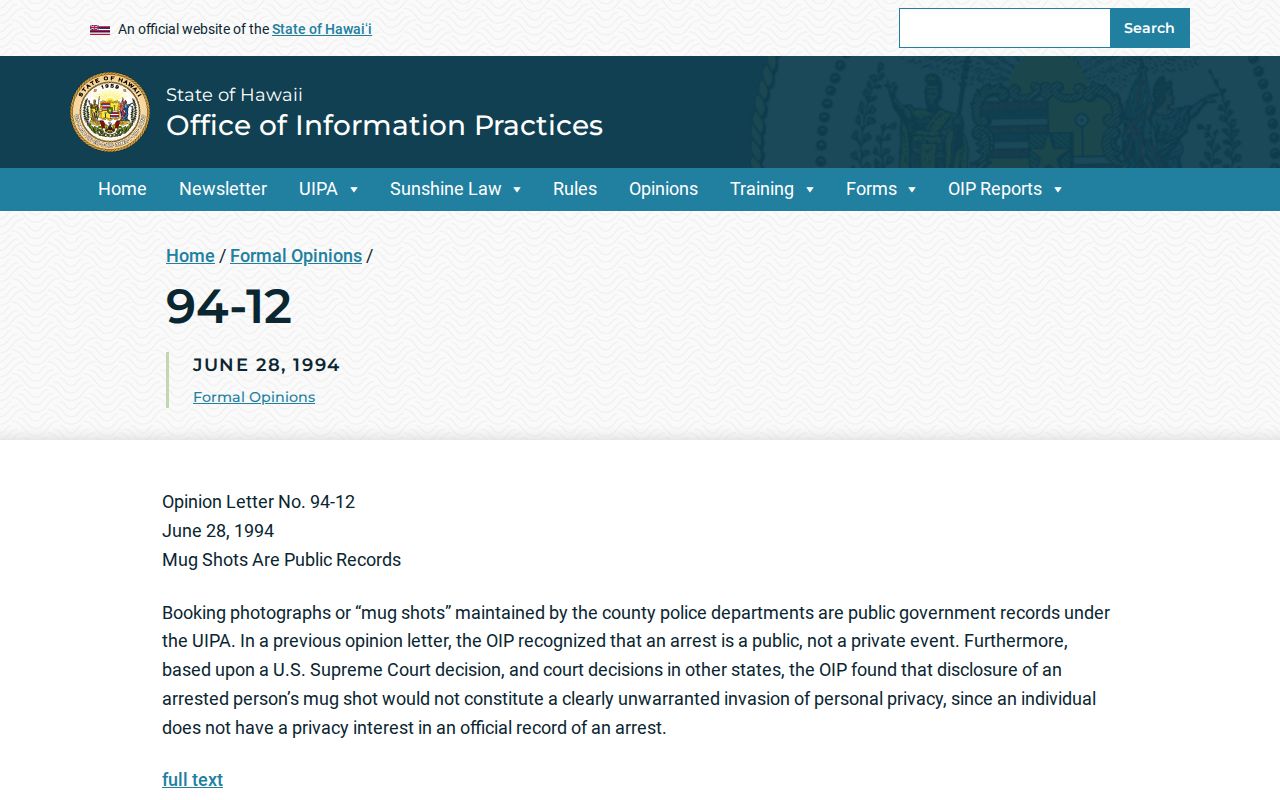
Hawaii OIP Opinion 94-12 treats police mugshots as government records. That places them under public-record rules and their exceptions. An agency might release a photo on request. It might use one in a public-assistance message. No Kalawao policy promises proactive release to newsrooms, and no fixed photo-posting schedule exists.
Pictures in news stories come from many places. Agency images, supplied portraits, scene shots, other editorial art. Read the caption closely. Something that looks like an intake portrait did not necessarily come from a booking file. A records request belongs with the agency that created the image, not automatically the publisher.
The OIP mugshot guidance is a starting point for a request. It is not permission to rehost an image. Juvenile, sealed, confidential, expunged, and active-investigation material may all be restricted. No booking photos appear on this page. The OIP mugshot opinion image below shows the Hawaii public-record source behind that distinction.
Read the opinion itself before making any records request.
Kalawao Arrest News: Maui Police
ANGLE F. The Maui Police News & Events stream is the closest official news route for this geography. Expect selected notices, missing-person appeals, safety messages, events, and department posts. There is no Kalawao filter. No daily booking window, no photo policy, no complete arrest archive.
A single post can still tell you which agency to call. It may also get updated after someone is taken into custody. That update pattern differs from a live custody roster. You cannot tell whether every booked person appears, whether an image is a booking photo, or how long the post stays up.
Keep the post date with any lead you save. Later, check the agency, the DCR custody path, and the court record. An old post is not current custody.
From a Kalawao Story to the Arrest Record
A news story can hand you a name, a date, a place, an agency, or a case clue. Take those details and work toward an official record in a fixed order. The Kalawao County booking and custody path shows the county-wide fallbacks for when no public roster exists.
- Read the full story and record its publication date, named agency, person’s name, and alleged charge.
- Ask whether the matter is DOH/Kalawao, NPS, Maui Police, DCR, or federal.
- Use SAVIN/VINELink only if state custody is plausible, and do not expect a mugshot field.
- Search eCourt Kōkua for a public case, knowing that sealed and non-digitized records may be absent.
- Request the report or photo from the creating agency under UIPA or FOIA.
Expect the official record to differ from the story. Release, amended charges, and dismissals all happen, and the court file is where the outcome gets described.
Kalawao Arrest Coverage Has No Roster
Kalaupapa has no city government of its own. That means no municipal police blotter and no county jail roster to pull from. A DOH jurisdiction table explains who actually handles law enforcement: a DOH-appointed sheriff with deputized officers, the National Park Service, and mutual aid from Maui. This split matters. One agency may appear in a news story while a different office holds the custody record. Geography shapes the news cycle here too. Cell reception is spotty at best, the park service warns. Its dispatch contacts run through Kalaupapa NHP Dispatch and Molokai Police. So a missing online story proves nothing. If no report appears, that reflects distance and bandwidth, not the absence of an incident. A story earns coverage because editors pick it. A record request, by contrast, goes straight to whichever office keeps the file. The Molokai Dispatch news page image below shows that coverage channel in action. Treat it as a doorway to reporting. It is never a substitute for the agency, court, or custody source itself.

Any lead drawn from that page should stay tied to the outlet's geography and its editorial limits.
Regional Kalawao Arrest News, Local Limits
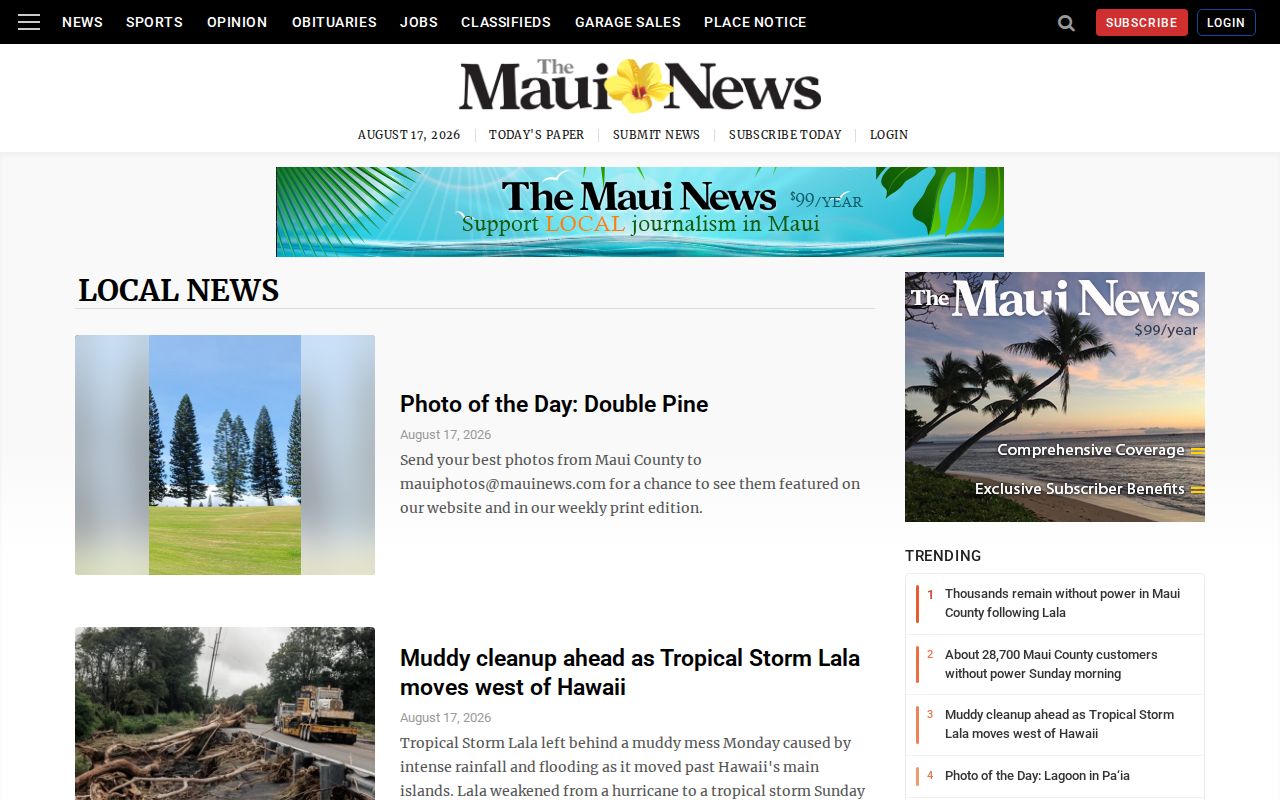
Regional outlets pick up some of the slack. The Maui News local-news section casts a wide net that sometimes reaches Molokai, though it is far from a Kalawao-only feed. Maui Now's Molokai arrest tag gathers stories by topic rather than serving as a county booking list. For policy angles, including questions about Kalaupapa's future governance, Hawaiʻi Public Radio local news offers solid public-affairs context. These outlets help you find a story or grasp a public debate. What they cannot do is promise a schedule. No fixed same-day or multi-day booking window exists among them, since each publishes on its own editorial cadence. A photo in a regional piece might come from the newsroom or from an agency. Track down the creator for the underlying record and the court for the legal outcome. The Maui News local-news page screenshot below illustrates what regional coverage looks like. It is not a Kalawao mugshot page. Never frame it as one.
Regional coverage is good for discovery and context. It never promises that every arrest or photo sees print.
Kalawao Third-Party Arrest Coverage: No Verified Page
The big commercial mugshot indexes come up empty here. Busted Newspaper, RecentlyBooked, Mugshots.com, Arrests.org, and Mugshots.zone have no verified Kalawao local page between them. A private Hawaii-records site did surface a possible Kalawao address. But the page would not load and could not be confirmed. None of these outlets counts as an official source. None offers a dependable Kalawao booking window. Suppose a publisher eventually posts a matching record. Check it against DOH, MPD, NPS, DCR, or the court first. Scrutinize the source date, the agency named, the charge wording, and the custody status. If the site offers a free correction process, use it. Official expungement and correction channels exist too. Never pay a stranger who promises guaranteed deletion or warrant clearance. An unverified index page is worth less than a dated local story that names the agency involved. The absence of a verified aggregator page is simply a fact. It is not an invitation to guess at a URL.
After Kalawao Arrest News, Check the Disposition
Once a case reaches court, the public record may show an arraignment or first appearance, release terms, a plea, dismissal, diversion, trial result, sentence, or another disposition. The Hawaii Judiciary records page leads to eCourt Kōkua, but the online view is not the complete file. Sealed, confidential, old, and non-digitized records may require the clerk.
A story can be accurate when published and still become incomplete later. Charges can be reduced or dismissed. A person can leave custody while the story remains online. A photo can be removed from a source page while a search result lingers. Use the source date and later court record together.
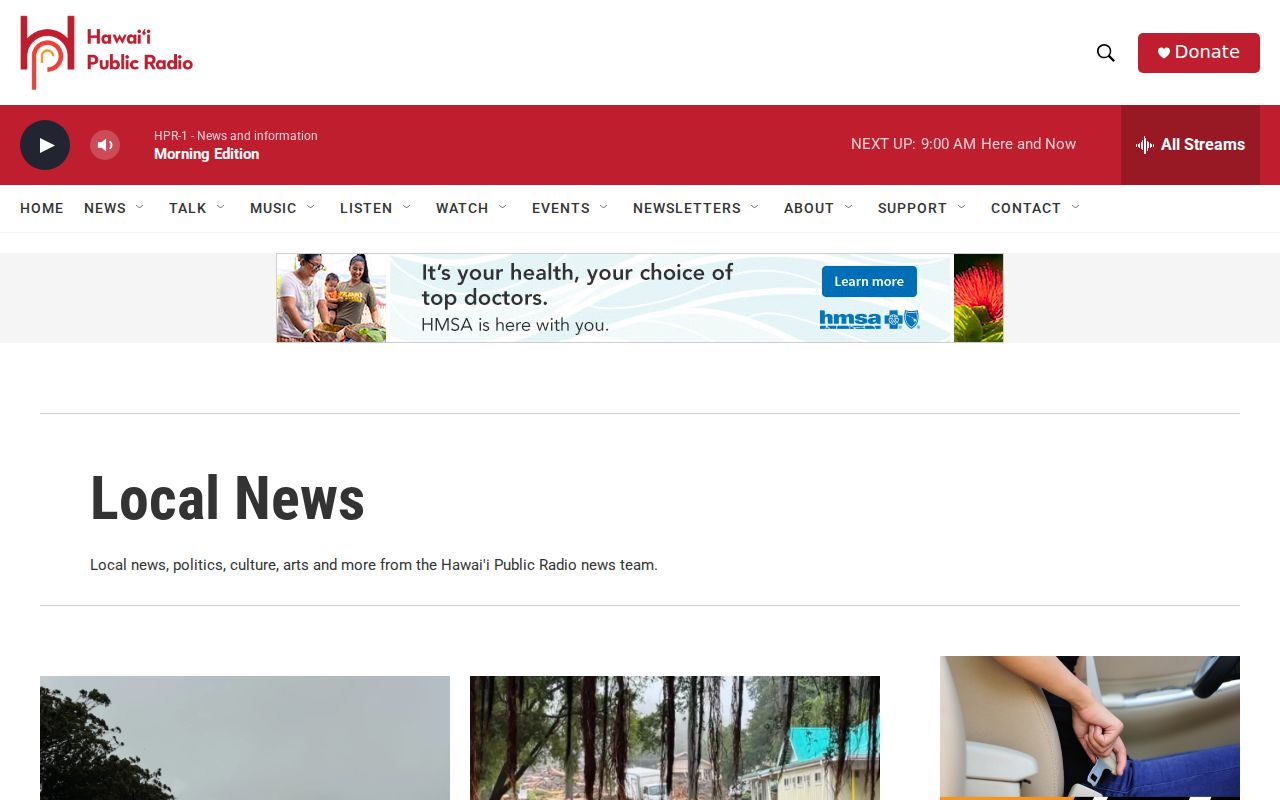
The Hawaiʻi Public Radio local-news page image below provides public-affairs context, not a conclusion about any person’s guilt.
A headline never settles a reported arrest. That answer lives with the official agency and the court disposition.